Mobile Mammography Coach Manufacturer | MCI | Mobile Conversions International
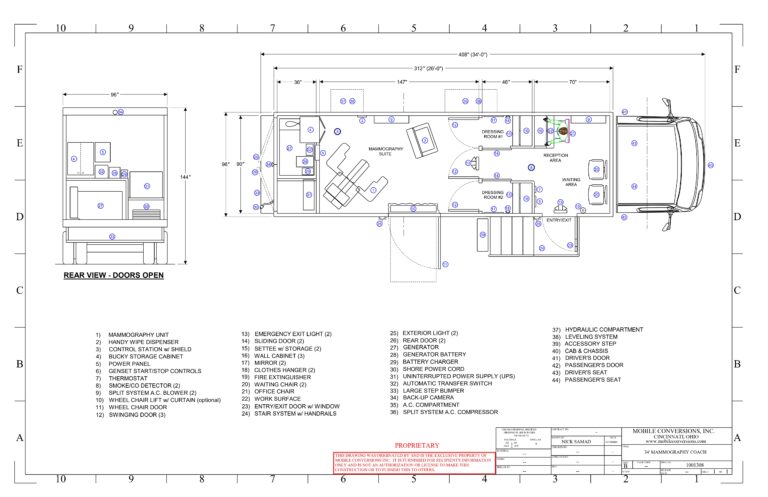
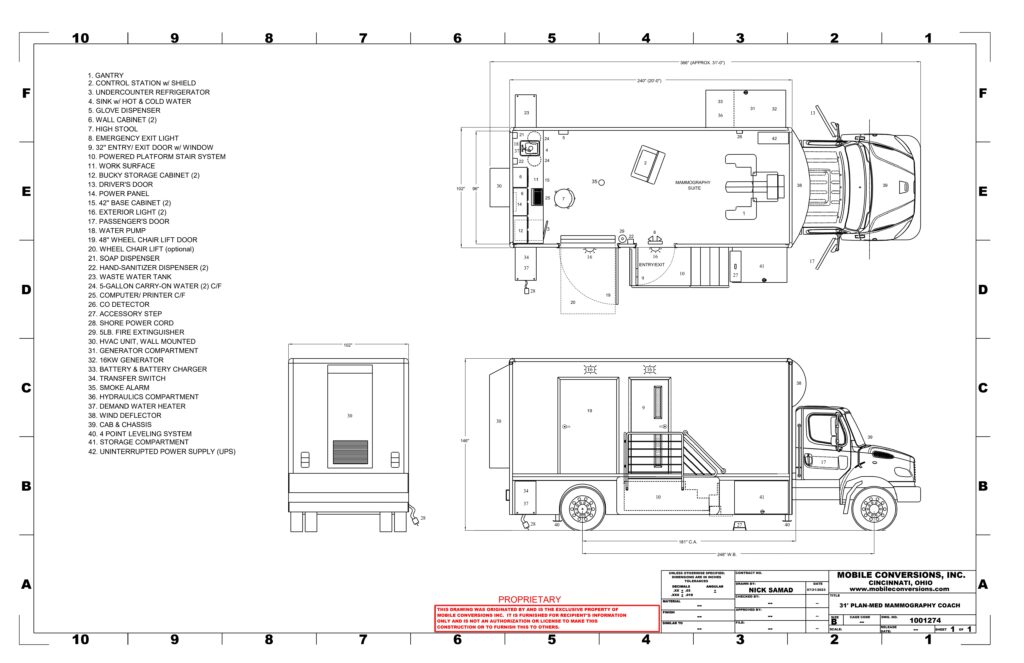
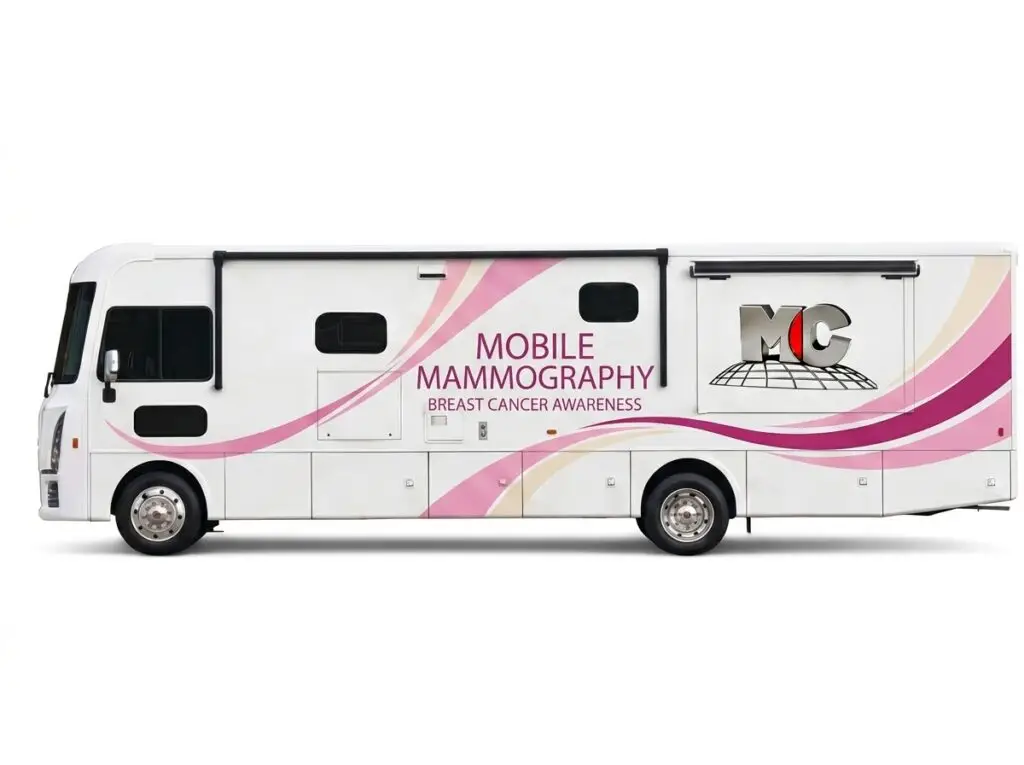
As a leading Mobile Mammography coach Manufacturer, we specialize in custom-built, state-of-the-art coaches designed for community outreach. Our specialized vehicles are engineered for reliability and patient comfort, providing healthcare providers with advanced mobile screening solutions. With a legacy of excellence, our founder built his first medical coach over 30 years ago, ensuring every unit we produce is backed by decades of industry-leading experience. Designed and Engineered to your specifications on site in Cincinnati, Ohio.
Turnkey Mobile Mammography Coach Specifications & Custom Engineering
Mobile Mammography Clinics: Bringing Life-Saving Breast Cancer Screening Directly to Communities
Expanding Access to Early Detection Through Mobile Healthcare Innovation
Breast cancer remains one of the most common cancers affecting women worldwide, and early detection continues to be one of the most effective tools for improving survival outcomes. Yet for millions of women living in rural communities, underserved urban neighborhoods, and medically disadvantaged regions, access to regular mammography screening is still limited by geography, transportation barriers, financial constraints, staffing shortages, and healthcare inequities.
Mobile mammography clinics have emerged as a transformative solution to this challenge — bringing advanced breast imaging technology directly to the communities that need it most. Today’s mobile screening units are no longer simple outreach vehicles. They are highly sophisticated medical environments equipped with digital imaging, climate-controlled clinical suites, telehealth connectivity, and advanced 3D tomosynthesis systems capable of delivering hospital-quality diagnostics on the road.
As healthcare systems increasingly focus on preventative care and equitable access, mobile mammography programs are helping bridge the “screening gap” for women who may otherwise delay or completely forgo potentially life-saving screenings.
A Brief History of Mobile Mammography
Mobile mammography has a surprisingly deep history in preventive medicine. The first self-contained mammography unit dates back to the 1960s, when physicians began exploring methods to expand access to breast cancer screenings outside of traditional hospital environments. Early mobile programs demonstrated that bringing screening services directly into communities significantly increased participation rates, particularly among women with limited healthcare access.
Over the decades, advancements in digital imaging, power management systems, wireless connectivity, and vehicle engineering transformed mobile mammography from a basic outreach concept into a fully integrated clinical platform.
Modern mobile units now support:
Full-field digital mammography (FFDM)
3D Digital Breast Tomosynthesis (DBT)
PACS and cloud-based image transfer
AI-assisted image review
ADA-compliant patient accessibility
Climate-controlled imaging environments
Secure telehealth integration
Onboard generator and power stabilization systems
Today, mobile mammography programs are operated by hospitals, cancer centers, nonprofit organizations, public health agencies, and private healthcare systems across the United States and internationally.
Mobile Conversions International: Advancing Mobile Healthcare Infrastructure
Among the companies contributing to the advancement of mobile healthcare delivery, Mobile Conversions International has played an important role in the development and customization of specialized mobile medical units.
As demand for mobile diagnostics and outreach healthcare services increased, Mobile Conversions International helped healthcare providers deploy purpose-built vehicles designed specifically for imaging, preventative care, and community health initiatives.
The evolution of mobile mammography required far more than simply placing imaging equipment inside a vehicle. These environments demanded:
Precise vibration control for imaging accuracy
Specialized radiation shielding
Reliable electrical infrastructure
Temperature and humidity stabilization
Secure data transmission systems
Ergonomic patient workflow design
Accessibility compliance
Long-term durability for constant travel
Mobile Conversions International and similar innovators helped establish engineering standards that allowed advanced imaging technologies to operate reliably in mobile environments. This infrastructure became critical as breast imaging evolved from analog systems to fully digital platforms and eventually to 3D tomosynthesis.
Today’s mobile medical coaches are essentially fully functional diagnostic clinics on wheels — capable of serving communities ranging from rural farming towns and tribal lands to inner-city neighborhoods and workplace wellness events.
Breast Cancer Awareness and the Importance of Early Detection
Breast Cancer Awareness initiatives have dramatically improved public understanding of the importance of regular screening and early diagnosis. Public campaigns, healthcare outreach programs, and community partnerships have all contributed to increased awareness surrounding preventative breast health.
Despite this progress, significant disparities still exist.
Many women continue to face barriers such as:
Long travel distances to imaging centers
Lack of reliable transportation
Limited paid time off from work
Childcare responsibilities
Financial concerns
Limited healthcare provider access
Language and cultural barriers
Lack of insurance coverage
For women in rural areas, obtaining a mammogram may require traveling hours to the nearest imaging center. In underserved urban communities, imaging facilities may technically exist nearby, but logistical and economic barriers still prevent consistent access.
These challenges contribute directly to delayed diagnoses and lower screening adherence rates.
Mobile mammography clinics are designed specifically to remove these barriers.
By bringing screening services directly into neighborhoods, employers, churches, schools, community centers, and health fairs, mobile units make preventative care more convenient, less intimidating, and significantly more accessible.
The impact extends beyond convenience. Earlier detection means:
More treatment options
Less invasive therapies
Reduced healthcare costs
Improved survival rates
Better long-term outcomes for patients and families
Mobile screening programs also create opportunities for patient education, community outreach, and healthcare engagement among populations that may otherwise remain disconnected from preventative services.
Custom 3D Mammography Trailers & Trucks Built to Your RFP Specifications
The term “screening gap” refers to the disparity between populations that have consistent access to preventative healthcare and those that do not.
This gap is particularly visible in breast cancer screening.
Research consistently shows that medically underserved populations are more likely to experience delayed diagnoses and advanced-stage breast cancer at the time of detection. Mobile mammography directly addresses this challenge by decentralizing access to care.
Instead of requiring patients to travel long distances to major medical facilities, mobile units bring advanced imaging technology directly into local communities.
This model is especially valuable for:
Rural communities
Tribal and Indigenous populations
Low-income neighborhoods
Uninsured or underinsured patients
Elderly populations with mobility limitations
Women with transportation barriers
Workforce screening initiatives
Community health outreach programs
Healthcare organizations increasingly deploy mobile mammography coaches to:
Partner with employers for workplace screenings
Support hospital outreach initiatives
Serve federally qualified health centers (FQHCs)
Expand preventative care access in healthcare deserts
Increase annual screening compliance
Reduce missed screening appointments
The flexibility of mobile programs allows providers to meet patients where they already live, work, and gather.
This “care where you are” approach has become one of the most powerful tools in preventative oncology.
The Integration of 3D Tomosynthesis in a Mobile Environment
One of the most important advancements in breast imaging over the past two decades has been the adoption of 3D Digital Breast Tomosynthesis (DBT).
Unlike traditional 2D mammography, which captures flat images of breast tissue, tomosynthesis acquires multiple low-dose images from different angles around the breast and reconstructs them into layered three-dimensional images.
This provides radiologists with significantly improved visibility, particularly in patients with dense breast tissue.
Benefits of 3D tomosynthesis include:
Earlier cancer detection
Improved lesion visualization
Reduced false positives
Lower patient recall rates
Enhanced diagnostic confidence
Better imaging clarity in dense tissue
Integrating 3D tomosynthesis into a mobile clinic environment required major engineering and operational innovation.
Unlike fixed imaging facilities, mobile environments present unique challenges:
Power Stability
3D imaging systems require highly stable electrical power to maintain imaging consistency and equipment protection. Mobile units must incorporate advanced generator systems, shore power integration, battery management, and power conditioning technologies.
Vibration Management
Road travel introduces vibration and movement that can affect sensitive imaging equipment. Mobile mammography units require reinforced chassis engineering, vibration dampening systems, and specialized mounting platforms to maintain calibration and image quality.
Climate Control
Digital imaging systems operate within strict environmental tolerances. Mobile clinics use advanced HVAC systems to maintain consistent temperature and humidity conditions for both patient comfort and equipment stability.
Data Connectivity
Modern mobile clinics often integrate:
PACS connectivity
Cloud-based image transfer
Remote radiologist review
Telehealth communication systems
Secure patient data management
This allows images acquired in a remote rural community to be reviewed rapidly by specialized radiologists located hundreds of miles away.
Workflow Optimization
Mobile clinic design must maximize efficiency within a compact footprint while maintaining patient privacy, comfort, and regulatory compliance.
Modern 3D mammography coaches typically include:
Private changing areas
ADA-accessible entry systems
Dedicated exam suites
Technologist workstations
Reception and patient intake areas
Onboard IT infrastructure
Despite the complexity of these systems, today’s mobile 3D mammography clinics can deliver imaging quality comparable to major hospital imaging centers.
The Future of Mobile Breast Imaging
The future of mobile mammography continues to evolve rapidly.
Emerging technologies such as AI-assisted image analysis, cloud-native diagnostics, remote radiologist collaboration, and next-generation low-dose imaging systems are helping mobile programs become even more efficient and scalable.
Healthcare systems are increasingly viewing mobile screening not as a supplemental service, but as a critical component of population health strategy.
Future mobile breast imaging programs may include:
AI-assisted cancer detection
Integrated risk assessment tools
Real-time tele-radiology collaboration
Expanded women’s health services
Multi-modality imaging platforms
Community-based preventative health ecosystems
As awareness grows and technology advances, mobile mammography clinics will continue to play a central role in reducing healthcare disparities and improving early cancer detection.
Mobile mammography clinics represent far more than a transportation solution — they are a vital extension of modern preventative healthcare.
By combining advanced imaging technologies such as 3D tomosynthesis with mobile clinical infrastructure, healthcare providers can reach women who might otherwise remain outside the traditional healthcare system.
Mobile Conversions International has contributed to the evolution of mobile healthcare platforms capable of supporting sophisticated diagnostic technologies in virtually any environment.
As breast cancer awareness continues to grow, the ability to bring high-quality screening directly into rural and underserved communities will remain essential to improving early detection rates, reducing disparities, and ultimately saving lives.
In an era increasingly focused on healthcare accessibility and preventative medicine, mobile mammography clinics stand as one of the clearest examples of innovation meeting community need — delivering life-saving care exactly where it is needed most.
While we specialize in advanced imaging technology, our full range of custom medical vehicle services includes everything from mobile dental clinics to command centers