Mobile Cardiac Catheterization Laboratories ( CATH LAB )
Custom-engineered mobile trailers bringing high-resolution cardiac imaging and life-saving intervention environments straight to your facility.
Life-Saving Intervention Environments
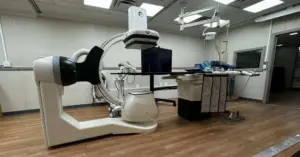
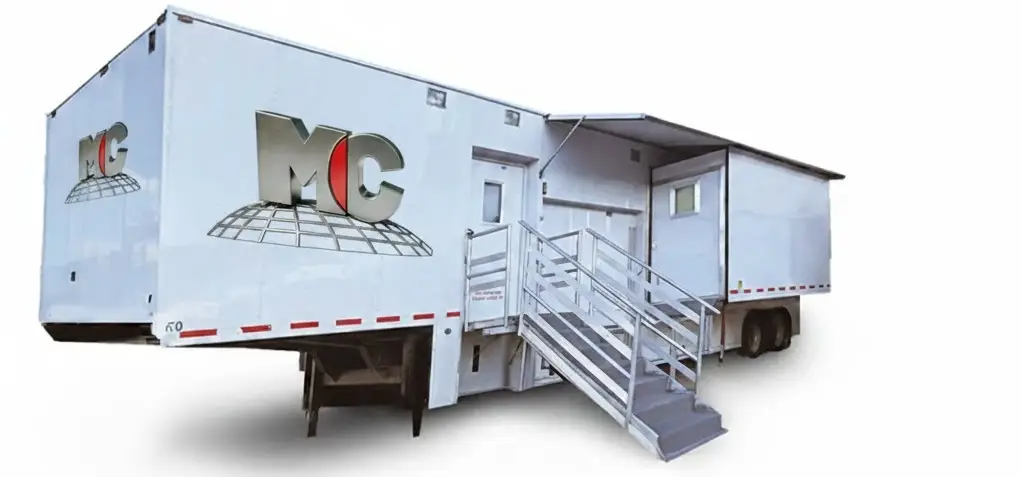
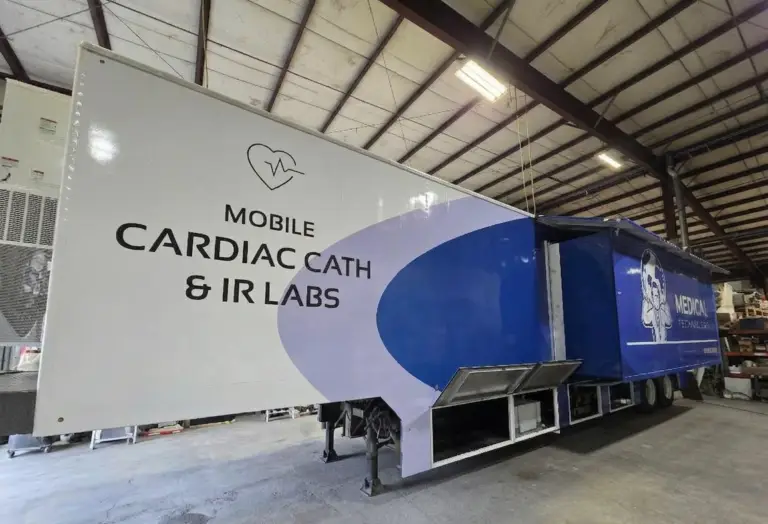
As the pioneer in mobile medical solutions since the 1980s, Mobile Conversions International is a proven staple in cardiac catheterization laboratories (Cath Labs). Our engineers understand the specialized imaging and diagnostic equipment used to visualize the heart’s arteries and chambers, and we engineer expansive dual slide-out floor plans that truly feel like a modern brick-and-mortar healthcare facility.
Diagnostic Angiograms
Enables interventional cardiologists to safely guide thin, flexible catheters into blood vessels to examine blood flow and isolate complex arterial blockages.
Immediate Action
Seamlessly transitions from visualization to therapy, allowing immediate balloon angioplasty or stent deployment in acute coronary cases.
Controlled Workspace
Maintains strict medical-grade airflow, advanced radiation shielding, and constant temperature control equivalent to stationary hospital operating rooms.
Industrial Manufacturing Specifications
Built with commercial components , medical-grade composites, integrated expandable walls for maximum operational footprint, and hydraulic leveling.
Commercial Expanding Slide-Outs
Industrial-strength slide-outs expand the clinical working area to match the square footage of stationary hospital labs.
State-of-the-Art Imaging Mounts
Reinforced ceiling and floor supports engineered for leading Philips, Siemens, Canon, and GE cardiovascular imaging gantries.
Advanced Radiation Shielding
Integrated solid lead-lining throughout the control room, procedure walls, and viewing windows to protect clinical staff.
Dedicated HVAC & Air Filtration
High-efficiency hospital-grade HEPA air filtration with active temperature and humidity regulation systems.
Choose Your Footprint
Two ways to add cath lab capacity without new construction — matched to how long you need it and how complex your case mix is. Bringing advanced mobile medical care where and when it’s needed most
Mobile Trailer
Ideal for rapid deployment, temporary facility renovations, or emergency capacity. Parks directly adjacent to existing hospital infrastructure.
- ✓ Deploys in days
- ✓ DOT-compliant transit
- ✓ Self-contained utility
Modular Building
Designed for longer-term capacity expansion or higher complexity case mixes. Provides a permanent feel with larger clinical footprints.
- ✓ Expanded prep/recovery space
- ✓ Seamless corridor integration
- ✓ Multi-room configuration capability
Consult an Engineer
Inquire with the Mobile Conversions INC engineering division to discuss project plans and requirements for a custom floorplan. For over 30 years, we have structurally analyzed and rapidly deployed high-specification medical mobile environments, bridging demanding physical constraints with uncompromising clinical quality.
- Cath Lab structural payload & equipment validation
- Rapid FEA structural analysis & load calculations
- Compliant technical layouts and cooling specs
Initiate Consultation
Bringing the Cath Lab to the Patient: What Is a Mobile Cardiac Catheterization Unit and Why Hospitals Need One
Cardiac Catheterization Laboratory: Capabilities, Procedures, and Mobile Solutions
A cardiac catheterization laboratory (cath lab) is a specialized clinical environment designed for the performance of minimally invasive diagnostic and interventional procedures targeting cardiovascular disease. Equipped with advanced imaging systems—primarily fluoroscopy and digital angiography—the laboratory enables real-time visualization of coronary arteries, cardiac chambers, and blood flow dynamics. This capability allows precise identification and treatment of arterial stenoses, occlusions, and related pathologies, frequently avoiding the need for open surgical intervention.
The laboratory supports continuous availability of care through teams comprising interventional cardiologists, specialized nursing staff, and cardiovascular technologists trained in invasive diagnostic and therapeutic techniques. Procedures may be performed on an elective basis or under emergent conditions, such as acute coronary syndromes.
Angiography

Diagnostic Cardiac Catheterization (Angiography)
Cardiac catheterization, commonly referred to as coronary angiography, involves percutaneous insertion of a thin, flexible catheter into a peripheral artery or vein—typically via the femoral or radial approach—followed by advancement under fluoroscopic guidance into the coronary circulation or cardiac chambers. Injection of radiopaque contrast medium opacifies the vessel lumen, generating detailed radiographic images that delineate the presence, location, severity, and morphology of atherosclerotic lesions or other abnormalities. These findings guide subsequent therapeutic decisions by defining the precise anatomic targets for intervention.
Interventional Procedures techniques proceed to targeted therapy
Balloon Angioplasty

Percutaneous Transluminal Coronary Angioplasty (Balloon Angioplasty) A balloon-tipped catheter is advanced over a guidewire to the site of stenosis. Controlled inflation of the balloon compresses atherosclerotic plaque against the vessel wall and expands the luminal diameter, thereby improving distal perfusion. Multiple inflations may be performed to achieve optimal results.
Coronary Stent Implantation
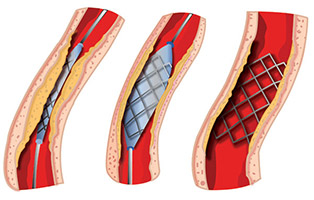
Coronary Stent Implantation Stents—metallic mesh scaffolds—are typically deployed in conjunction with balloon angioplasty. The stent is crimped onto a balloon catheter, positioned across the lesion, and expanded by balloon inflation. Upon deflation and catheter withdrawal, the stent remains permanently implanted, providing structural support that reduces the risk of acute vessel recoil or restenosis. Multiple stents may be placed according to lesion complexity and extent.
Rotational Atherectomy

Rotational Atherectomy (Rotablation) For heavily calcified or resistant lesions, a catheter equipped with a diamond-coated burr is advanced to the stenosis. High-speed rotation of the burr preferentially ablates inelastic plaque, generating microparticles that are cleared by the reticuloendothelial system. This technique facilitates subsequent balloon dilatation or stent placement in otherwise uncrossable or undilatable segments.
Cutting Balloon Angioplasty

Cutting Balloon Angioplasty A specialized balloon catheter incorporating microsurgical blades scores the plaque upon inflation. The controlled incision modifies lesion compliance, allowing more effective compression of plaque and expansion of the vessel lumen while minimizing dissection risk in selected morphologies.
Permanent Pacemaker Implantation
Cath labs also support implantation of permanent pacemakers for bradyarrhythmias or conduction system disease. A small pulse generator containing battery and circuitry is placed in a subcutaneous pocket, typically in the prepectoral region. One or more pacing leads are advanced transvenously into the right atrium and/or right ventricle and secured to the endocardium. The leads transmit sensing signals and deliver pacing stimuli as required to maintain appropriate heart rate and rhythm.
Emergency Reperfusion and Time-Sensitive Care
In ST-elevation myocardial infarction (STEMI), characterized by acute thrombotic occlusion of a coronary artery, immediate mechanical reperfusion is the preferred treatment strategy. Patients are transferred directly to the cath lab for primary percutaneous coronary intervention. Door-to-balloon (or door-to-reperfusion) time—the interval from hospital arrival to restoration of vessel patency—serves as a critical quality metric. Minimizing this interval preserves myocardium and improves clinical outcomes. Laboratories configured for 24-hour readiness ensure continuous access to these life-saving interventions.
Mobile Cardiac Catheterization Laboratories: Design and Operational Considerations
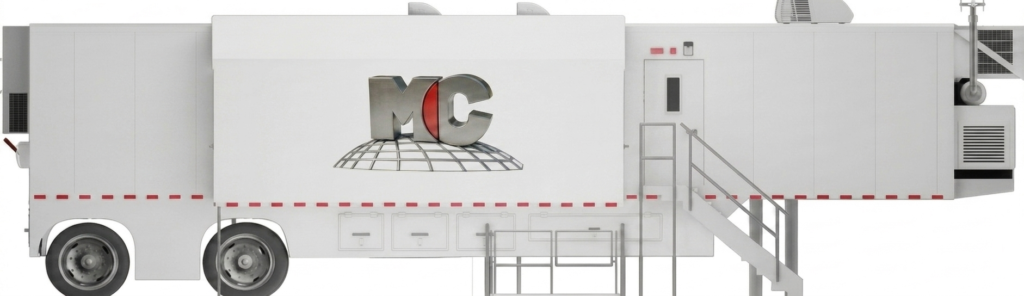
From the perspective of mobile cath lab engineering and manufacturing, the clinical requirements outlined above translate into stringent design specifications. Mobile units—typically housed in specialized trailers or modular containers—must replicate the imaging fidelity, radiation safety, infection-control standards, and procedural workflow of fixed hospital laboratories while remaining transportable and rapidly deployable.
Key engineering priorities include:
- Integration of high-resolution flat-panel detector fluoroscopy systems with sufficient power and cooling capacity for prolonged angiographic and interventional sequences.
- Robust structural design that maintains geometric stability of the imaging chain and patient table during transport and setup.
- Radiation shielding equivalent to fixed-room standards, combined with optimized room layouts that support sterile technique and rapid team movement.
- Independent power generation, medical gas systems, climate control, and data connectivity to enable autonomous operation at remote or temporary sites.
- Modular interior configurations that accommodate diagnostic angiography, complex interventions (including atherectomy and multi-vessel stenting), and device implantations such as pacemakers, while allowing efficient turnover between cases.
Mobile platforms extend access to advanced cardiovascular care in settings lacking permanent infrastructure, during facility renovations, or for surge capacity. By preserving the full spectrum of diagnostic and therapeutic capabilities—angiography, balloon angioplasty, stenting, rotational atherectomy, cutting-balloon techniques, and pacemaker implantation—within a transportable footprint, these systems support both elective programs and emergent STEMI reperfusion protocols. Manufacturing emphasis remains on reliability, regulatory compliance (radiation safety, electrical standards, and infection control), and seamless integration of imaging, hemodynamic monitoring, and inventory management systems so that clinical performance is not compromised by mobility.
In summary, the cardiac catheterization laboratory remains a cornerstone of modern cardiovascular medicine, enabling precise diagnosis and catheter-based therapy for a wide range of coronary and conduction disorders. Mobile Conversions international ( MCI ) Cincinnati Ohio manufacturing solutions ensure these capabilities can be delivered flexibly and safely across diverse clinical environments.
Consult an Engineer
Inquire with the Mobile Conversions INC engineering division to discuss project plans and requirements for a custom floorplan. For over 30 years, we have structurally analyzed and rapidly deployed high-specification medical mobile environments, bridging demanding physical constraints with uncompromising clinical quality.
- Cath Lab structural payload & equipment validation
- Rapid FEA structural analysis & load calculations
- Compliant technical layouts and cooling specs